If you have never visited one, "senior living" can sound like a polite way of saying old-age home. It isn't. The easiest way to understand it is to picture your own flat, then picture a building around it that quietly takes care of the boring, tiring, risky parts of daily life.
In this guide
A home with a helpful building around it
In a senior living community you have a private apartment — your front door, your kitchen, your own furniture, your own rules. What changes is everything outside that door. The lifts are big enough for a wheelchair. The corridors are lit and level. Someone is on duty at night. There's a clubhouse where people actually meet, a doctor you can reach in minutes, and a team that handles housekeeping and maintenance so that a leaking tap doesn't become a family crisis.
Developers in India call the category RHLC — Residences with Hospitality and Care. The name is clunky, but it captures the idea: the residence comes first, and hospitality and care are layered on top.
What you typically get
- Barrier-free design — wider doors, no steps inside the home, grab rails, non-slip floors, bathrooms you can use safely.
- Emergency response — panic buttons or alarms, and a process for what happens next. Ask to see it work.
- Medical support — anything from a visiting doctor to a full on-site clinic, depending on the project.
- Hospitality — housekeeping, dining if you want it, a concierge for the thousand small errands.
- Company — yoga, walks, cards, music, festivals. Loneliness is a bigger health risk than most families realise, and a community answers it directly.
What it is not
It is not a hospital, and it is not a nursing home. Most communities are built for people who are independent or nearly so, with help on call. It is also not a place you are sent to; the happiest residents are the ones who chose it themselves while they were still well.
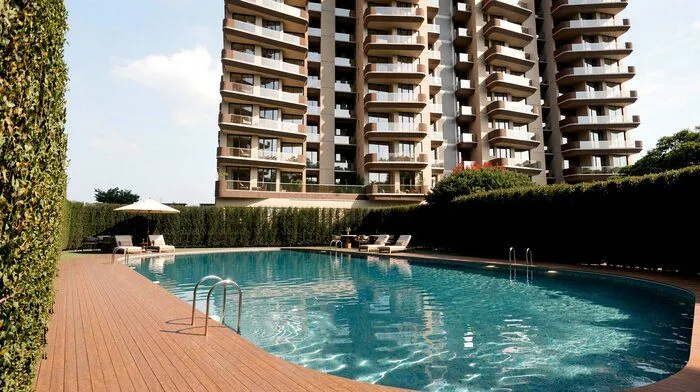
One honest warning. Some projects use "senior" in the marketing but are really wellness-themed apartments with no care team. Nothing wrong with that — we list two such projects ourselves and label them clearly — but you should know which kind you are looking at before you fall in love with the swimming pool.
The spectrum of care
Care is not one thing. It runs along a line: independent living at one end, then assisted living (help with bathing, medication or meals), then memory care, then skilled nursing. Most of the communities in Gurgaon sit at the independent end with medical help close by. A few operators, Antara among them, run the wider spectrum so residents don't have to move again if their needs change. That single question — what happens if I need more care in five years? — is worth asking everywhere you visit.
Who it actually suits
Retired couples who are tired of maintaining a large house. Widowed parents whose children live in another city. People whose homes have too many stairs. Families who want their parents nearby, safe and sociable without anyone becoming a full-time carer. And, increasingly, people in their late fifties who simply want to arrange a good next chapter on their own terms.
It suits fewer people who need round-the-clock nursing, or who are happiest in a long-time neighbourhood with relatives next door. For them, staying put with support, or a dedicated care home, may be better. We'll tell you that straight.
Where to start
Browse the full collection side by side, read our guide to senior living in Gurgaon, or talk to an advisor — it costs nothing, and a first conversation usually settles half your questions.